Section 1: Introduction & Industry Overview of House Wiring & Electrical Safety Guide in Sri Lanka: Hiring Certified Electricians (2026 Costs)
As we move into 2026, the landscape of electrical engineering and domestic house wiring in Sri Lanka has undergone a massive transformation. Driven by the rapid adoption of renewable energy, smart home technologies, and more stringent safety regulations enforced by the Public Utilities Commission of Sri Lanka (PUCSL), homeowners and developers are no longer looking for just 'someone who can fix a wire.' The demand has shifted toward certified electrical technicians who understand the nuances of the 18th and 19th editions of the IEE Wiring Regulations (BS 7671).
The importance of professional wiring cannot be overstated. In a tropical climate like Sri Lanka, where high humidity and frequent lightning strikes are common, electrical safety is a matter of life and death. This guide serves as the definitive resource for understanding the costs, technical requirements, and regional market dynamics across all 25 districts of the island. Whether you are building a luxury villa in Galle, a high-rise apartment in Colombo, or a commercial warehouse in Vavuniya, understanding the 2026 price benchmarks is essential for financial planning and safety assurance.
In 2026, the industry is also grappling with the stabilization of material costs following years of economic fluctuation. Brands like ACL Cables and Kelani Cables remain the gold standard, but the integration of imported smart components has introduced new variables into the pricing equation. This guide will break down these complexities, ensuring you have the knowledge to hire the right professional at a fair market price.
Section 2: Market Demand & Regional Target Audience Analysis across 25 Districts
The demand for electrical services in Sri Lanka is not uniform. It is heavily influenced by regional development, urbanization rates, and local climate conditions. Below is a breakdown of the market dynamics across the 25 districts:
The Urban Powerhouses: Colombo, Gampaha, and Kalutara
In the Western Province, the focus is on modernization and smart integration. Homeowners in Colombo and Gampaha are increasingly requesting home automation systems, EV charging points, and sophisticated lighting designs. The density of high-rise buildings and commercial complexes in Kalutara and Colombo 01-15 demands electricians with high-level NVQ (National Vocational Qualification) certifications.
The Tourism & Heritage Hubs: Kandy, Matale, Nuwara Eliya, and Galle
In Kandy and Nuwara Eliya, the electrical needs are often tied to the hospitality sector. Boutique hotels and colonial bungalows require specialized wiring that preserves aesthetic value while meeting modern safety standards. In Galle and Matara, the coastal environment necessitates 'marine-grade' considerations, using corrosion-resistant conduits and high-quality insulation to combat the salt air.
Reconstruction and Growth: Jaffna, Kilinochchi, Mullaitivu, and Mannar
The Northern Province, including Jaffna and Kilinochchi, is seeing a surge in residential construction. There is a high demand for basic but robust house wiring solutions. Local electricians are also seeing a massive uptick in Off-grid Solar System installations due to the high solar irradiance in these regions.
The Agricultural & Industrial Heartland: Kurunegala, Anuradhapura, Polonnaruwa, and Puttalam
In districts like Kurunegala and Anuradhapura, the demand is split between residential housing and agro-industrial setups (such as rice mills and cold storage). Puttalam has a unique market for wind-energy related electrical maintenance and industrial-grade wiring for salt pans and shrimp farms.
The Eastern Frontier: Trincomalee, Batticaloa, and Ampara
With Trincomalee developing as a major port and tourism hub, the demand for certified commercial electricians is peaking. In Batticaloa and Ampara, rural electrification projects are transitioning into domestic upgrades as the middle class expands.
The Uva and Sabaragamuwa Regions: Badulla, Monaragala, Ratnapura, and Kegalle
In Ratnapura (the City of Gems) and Kegalle, the hilly terrain and heavy rainfall make lightning protection systems a mandatory addition to any house wiring project. Badulla and Monaragala are seeing growth in sustainable eco-tourism wiring requirements.
Section 3: Financial Requirements, Initial Capital & Budget Breakdown in LKR (2026 Projections)
Budgeting for house wiring in 2026 requires a clear understanding of the 'Cost per Point' model versus 'Lump Sum' contracts. Below is an estimated breakdown of costs in Sri Lankan Rupees (LKR).
Estimated Labor Costs per Point (2026)
| Service Type | Colombo/Gampaha (LKR) | Other Districts (LKR) |
|---|---|---|
| Light/Fan Point (Wiring Only) | 3,500 - 4,500 | 2,800 - 3,800 |
| Plug Point (13A/15A) | 4,000 - 5,500 | 3,500 - 4,500 |
| AC/Geyser Point | 6,000 - 8,500 | 5,500 - 7,000 |
| Main Switchboard (DB) Installation | 15,000 - 25,000 | 12,000 - 20,000 |
Material Cost Estimates
For a standard 3-bedroom house (approx. 1,500 sq. ft.), the material budget for 2026 is projected as follows:
- Cables (ACL/Kelani): LKR 350,000 - 500,000 (depending on thickness and length).
- Conduits and Accessories: LKR 75,000 - 120,000.
- Switchgear (MCBs, RCCBs, Isolators): LKR 60,000 - 90,000 (Brands like Orange, ABB, or Schneider).
- Lighting Fixtures & Switches: LKR 150,000 - 400,000 (Highly variable based on luxury choices).
Total Estimated Budget for a 3-Bedroom House
Economy Tier: LKR 850,000 - 1,100,000
Standard Tier: LKR 1,200,000 - 1,600,000
Luxury/Smart Home Tier: LKR 2,500,000+
Section 4: Step-by-Step Implementation & Operational Roadmap
Hiring an electrician or managing a wiring project in Sri Lanka involves a structured process to ensure safety and compliance with CEB (Ceylon Electricity Board) or LECO (Lanka Electricity Company) standards.
Step 1: Design and Load Calculation
Before buying a single meter of wire, a certified electrician must create a load schedule. This calculates the total power consumption to determine the size of the main incoming cable and the capacity of the RCCB (Residual Current Circuit Breaker). This is critical for preventing fire hazards.
Step 2: Choosing the Right Professional
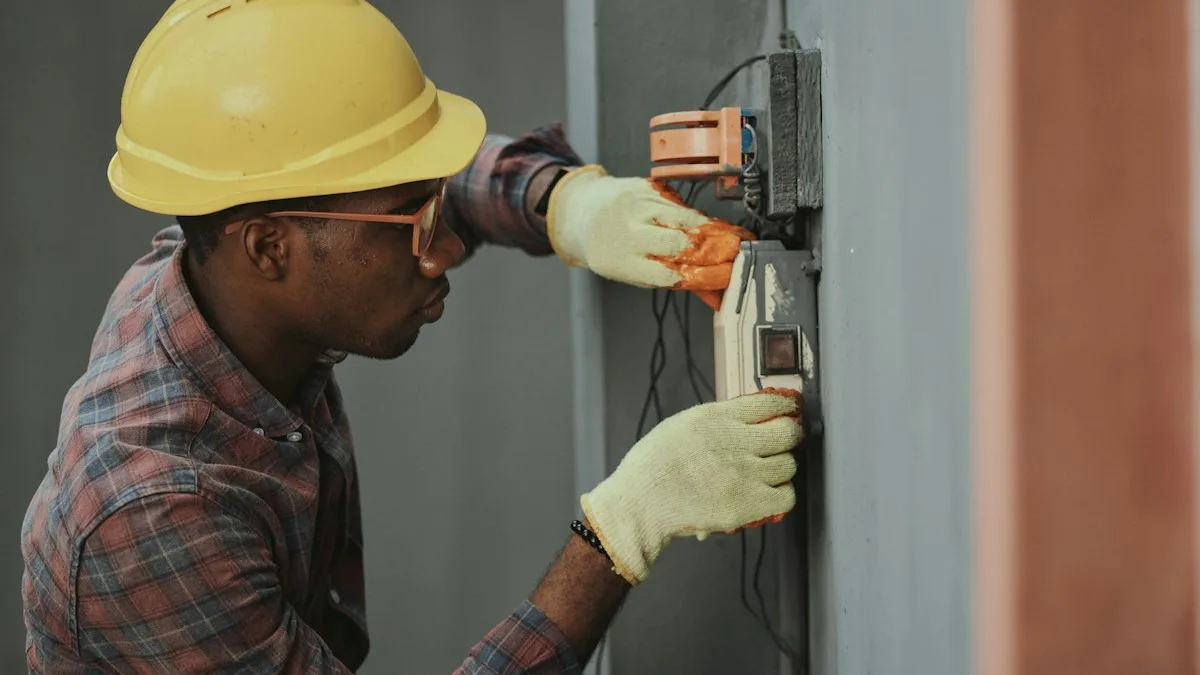
Always verify the technician's PUCSL ID card. In 2026, the government has made it mandatory for all electricians to be registered under a national database. Ask for their NVQ level (Level 4 is standard for house wiring).
Step 3: Rough-in Wiring (Conduiting)
This happens during the masonry stage. Ensure that conduits are laid deep enough in the walls to avoid cracking the plaster. In districts like Hambantota or Trincomalee, ensure heavy-duty PVC is used to withstand high ground temperatures if laying underground.
Step 4: Wiring and Earthing
Insist on a proper earthing system. The Earth Resistance Test should ideally yield a result below 1 Ohm. This is the most ignored step in Sri Lanka but the most vital for saving lives during a short circuit.
Step 5: Testing and Commissioning
The electrician must perform a continuity test, insulation resistance test, and polarity test before the CEB/LECO inspector arrives to grant the final connection.
Section 5: Marketing, Branding & Digital Customer Acquisition Strategy
For electrical contractors and entrepreneurs in the industry, 2026 is the year of digital dominance. Traditional word-of-mouth is now supplemented by digital trust.
1. SEO and Directory Presence
As a master SEO author, I recommend targeting long-tail keywords like "Best electrician in Kurunegala" or "Industrial wiring services Vavuniya." Listing your business on Google Maps (Google Business Profile) is non-negotiable. Ensure you have high-quality photos of your DB (Distribution Board) wiring, which acts as your visual resume.
2. WhatsApp Business & Automation
In Sri Lanka, WhatsApp is the primary communication tool. Use WhatsApp Business to send automated catalogs of your services and pricing tiers. Use the 'Status' feature to showcase daily work-in-progress shots from sites in Jaffna or Galle to build localized trust.
3. Content Marketing on Social Media
Create short, educational videos on TikTok and Facebook Reels explaining "How to identify fake cables" or "Why your trip switch keeps falling." Educating the customer builds authority. Target specific districts using Facebook Ads' geographic tagging to reach homeowners in Gampaha or Kandy who are currently in the 'Construction' interest group.
Section 6: Legal Business Registration, Tax & Regulatory Compliance in Sri Lanka
Operating an electrical contracting business requires adherence to the Sri Lankan legal framework. Whether you are a solo technician or a large firm, compliance is key to winning government and high-end commercial contracts.
Business Registration
Register as a Sole Proprietorship at your local Divisional Secretariat for a small fee. For larger operations, registering as a Private Limited Company (Pvt Ltd) through the Registrar of Companies provides better liability protection and a more professional image for corporate clients in Colombo 03 or Colombo 07.
Taxation (TIN and VAT)
As of 2026, having a Taxpayer Identification Number (TIN) is mandatory for all citizens and businesses in Sri Lanka. If your annual turnover exceeds the threshold set by the Inland Revenue Department, you must register for VAT (Value Added Tax). Providing a formal VAT invoice is often a requirement for large-scale projects in the Hambantota Port or Port City Colombo areas.
PUCSL Licensing
The Public Utilities Commission of Sri Lanka issues licenses based on competency. Ensure your license is renewed annually. This license is required to sign off on the 'Installation Test Certificate' needed for new electricity connections.
Section 7: Long-Term Scaling, Risk Mitigation & Conclusion
The future of the electrical industry in Sri Lanka lies in Sustainability and Specialization. To scale your business or ensure your home is future-proofed, consider the following:
Scaling into Solar and EV
By 2026, almost every new house in Anuradhapura and Polonnaruwa is designed with solar in mind. Electricians who specialize in Hybrid Solar Inverters and Level 2 EV Charging Stations will command a 40% premium over general house wirers.
Risk Mitigation
Always maintain Professional Indemnity Insurance. If a fire occurs due to a wiring fault, insurance protects your business. For homeowners, always keep a 'Wiring Diagram' of your house; this is invaluable for future repairs and increases the resale value of the property.
Conclusion
House wiring in Sri Lanka has evolved from a basic utility to a sophisticated engineering task. With costs in 2026 reflecting a more stabilized but premium market, the emphasis must remain on quality over cost. By hiring PUCSL-certified professionals and using top-tier local brands like ACL and Kelani, you ensure the safety of your family and the longevity of your investment across any of the 25 districts of this beautiful island.